GSTA-C: CO Gas Sensor with Modbus RTU Connectivity!
Posted on: 19/11/2025
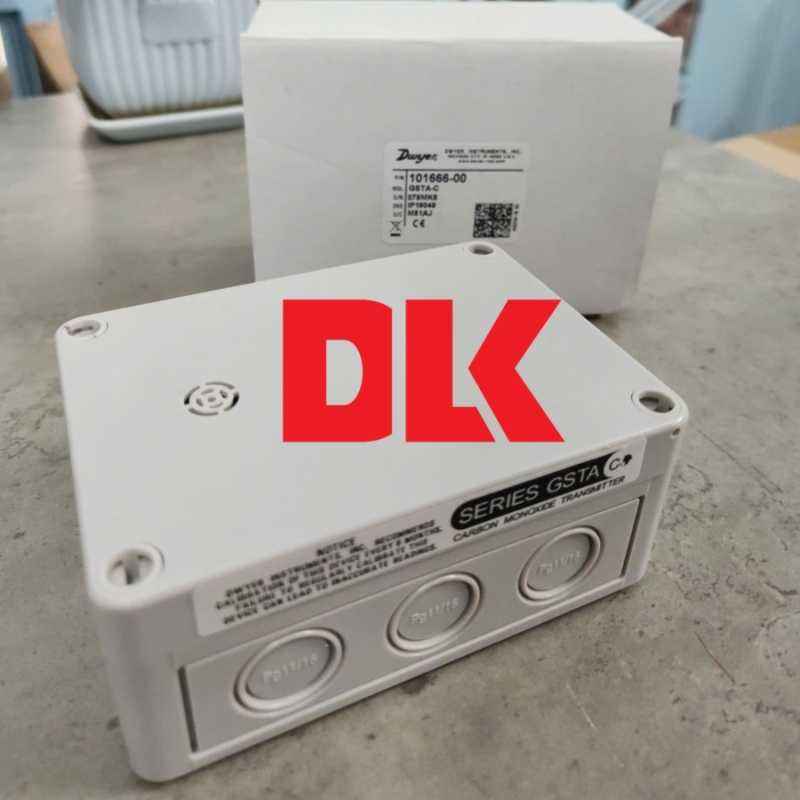
The GSTA-C is a modular toxic gas sensor transmitter designed for air quality monitoring applications in industrial environments, parking garages, and mechanical rooms. The product stands out for its Modbus RTU digital communication capability and flexible modular structure (supporting CO, NO2, H2S, O2, etc.). The GSTA-C simplifies installation and maintenance by allowing multiple devices to be daisy-chained using just a single pair of signal wires. The IP66 enclosure ensures superior durability in harsh conditions.
GSTA-C: CO Gas Sensor with Modbus RTU Connectivity!
1. Are you tired of the "Jungle of Wires"?
If you are a building manager, a large parking garage engineer, or a factory manager, you've probably experienced the "headache" of installing gas sensors.
-
Each sensor requires pulling a separate pair of wires back to the control panel.
-
Long wires mean signals are easily susceptible to interference.
-
Time consuming wiring and programming.
It's time to free yourself from those hassles with the Dwyer GSTA-C – a toxic gas monitoring solution that uses fewer wires through Modbus RTU communication.
2. The Secret: The Power of Modbus RTU Digital Communication
The GSTA-C doesn't just measure gas (CO, NO2); it can also "talk" directly to your Building Management System (BMS/BAS) using the Modbus RTU language.
What is Modbus RTU? Imagine it as an "internal network cable" for industrial devices.
🔥 Benefit No. 1: Significant Savings on Wiring and Installation Costs
Instead of 10 sensors = 10 separate pairs of wires, with the GSTA-C, you only need:
-
1 single pair of wires for all your GSTA-C sensors!
-
Sensors are daisy-chained (connected in series) from one sensor to the next.
-
Result: Up to 80% reduction in wiring, saving money on cables, labor costs, and installation time.
.jpg)
🔥 Benefit No. 2: Highly Accurate and Interference-Free Data
Old 4-20 mA analog signals are highly susceptible to electromagnetic interference, which can cause toxic gas readings to be inaccurate. The GSTA-C's Modbus RTU transmits data in a Digital format:
-
Absolute Accuracy: The PPM (parts per million) reading sent to your BMS is perfect, unaffected by distance or noise.
-
More Information: Besides gas concentration, the GSTA-C can "tell" the BMS about the sensor's health status, ambient temperature, or error alerts! This helps you know when a sensor is about to fail for timely replacement (Predictive Maintenance).
🔥 Benefit No. 3: Quick and Easy Integration with Existing BMS Systems
No matter which BMS brand you use (Siemens, Honeywell, Delta, etc.), most "understand" Modbus RTU.
-
Plug & Play: Modbus programming is extremely simple. Just assign a unique ID (address) to each sensor.
-
Centralized Management: You can easily view, check, and control dozens of GSTA-C sensors from the central screen of your BMS.
3. How GSTA-C is Superior to CMT200
|
Criteria |
CMT200 (Basic 4-20 mA Sensor) |
GSTA-C (Smart Modbus Sensor) |
|
Measures |
CO |
CO, NO2 |
|
Wiring |
1 sensor = 1 separate pair of wires. |
Multiple sensors = 1 shared pair of wires. |
|
Data Sent |
Only Gas Concentration (Prone to interference). |
Concentration + Sensor Health Status (High accuracy). |
|
Durability |
Only for standard environments. |
IP66 casing, strong dust and water resistance. |
DLK TRADING & SERVICE CO., LTD
📍 Office: 111/7 Vườn Lài, Phú Thọ Hòa Ward, Ho Chi Minh City
📞 Hotline: 070 357 0101
📧 Email: info@dlk.com.vn
🌐 Website: https://dlk.com.vn/
📘 Facebook: https://www.facebook.com/congtydlk
📺 YouTube: https://www.youtube.com/@CongtyDLK