Dwyer MSX-W12-PA-LCD Differential Pressure Transmitter – Fast Calibration, Flexible Output
Posted on: 17/07/2026
Unlike liquid pressure sensors made of stainless steel, the MSX-W12-PA-LCD differential pressure transmitter is specifically designed for gaseous media in HVAC air ducts. Featuring Magnesense® Pro technology and a built-in LCD display, this product allows engineers to easily calibrate and read differential pressure values directly on-site without requiring any additional diagnostic tools.
Introduction to the MSX Series – Model MSX-W12-PA-LCD
The MSX-W12-PA-LCD, a member of Dwyer's MSX Pro Magnesense® Series, is an electronic differential pressure transmitter that outputs an analog signal. It features an integrated LCD display, allowing real-time measurement readings on-site without external devices. The product supports fast zeroing (auto-zero), making it ideal for modern HVAC systems that require high accuracy and flexibility in signal integration.
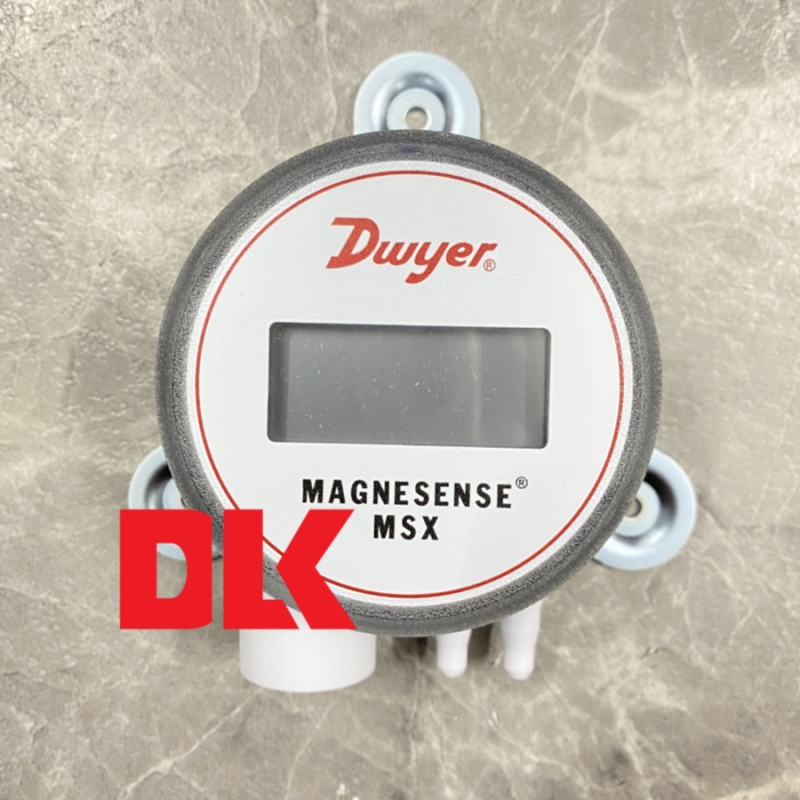
Product Specifications
|
Specification |
Details |
|
Product Line |
MSX-W12-PA-LCD (MSX Pro Magnesense® Series) |
|
Manufacturer |
Dwyer (DwyerOmega) – US Brand, Manufactured in the USA |
|
Compatible Media |
Air (Specifically designed for air duct systems) |
|
Product Type |
Air Differential Pressure Transmitter |
|
Main Function |
Measures differential air pressure and outputs electrical signals |
|
Display |
Integrated LCD for direct on-site readings |
|
Measurement Tech |
Magnesense® Pro – Fast calibration and long-term stability |
|
Sourcing |
Imported directly by DLK TRADING SERVICE COMPANY LIMITED |
|
Warranty |
12 months (Optional upgrade up to 36 months) |
Installation and Operation Guide
The MSX-W12-PA-LCD differential pressure transmitter is designed for easy installation and on-site calibration via its integrated LCD screen. The basic installation procedure is as follows:
-
Mounting: Select a mounting location on the air duct wall or electrical cabinet close to the measurement point. Ensure it is easily accessible for reading the LCD screen and performing calibration in the future.
-
Tubing: Connect the pressure signal tubing (flexible plastic tubes) from the two measurement points on the air duct to the high and low-pressure ports of the transmitter, ensuring all connection points are airtight.
-
Wiring: Connect the power supply and output signal wires according to the wiring diagram provided in the technical manual, routing them to the BMS or central controller.
-
Auto-Zero: After powering up, perform the auto-zero calibration via the LCD screen while there is no pressure difference between the two measurement ports.
-
Configuration: Set the appropriate measurement range and output signal type matching your system requirements using the integrated buttons on the transmitter housing.
-
Verification: Observe the real-time value on the LCD screen to confirm the transmitter is reading the actual differential pressure correctly at the installation site.
-
Maintenance: Periodically inspect and perform auto-zero when necessary (recommended every 6-12 months) to maintain long-term accuracy. Note: For air filter monitoring applications, the measurement points should be placed before and after the filter so the transmitter accurately reflects filter clogging over time.
Practical Applications:
-
Monitoring air differential pressure in building AHU and FCU systems.
-
Controlling pressure in clean rooms and isolation rooms where local visual displays are required.
-
Integrating differential pressure signals into the BMS for automated control of fans and dampers.
-
Monitoring air filter status and triggering alerts when differential pressure exceeds thresholds.
Why Choose MSX-W12-PA-LCD from DLK?
-
Genuine Dwyer products, imported directly with full CO/CQ documentation.
-
Technical team available to advise on output configuration and appropriate scaling for your existing BMS.
-
Detailed instructional wiring videos, catalogs, manuals, and datasheets are readily available.
-
Transparent warranty policies and rapid post-sales technical support.
Contact DLK for Consultation & Quotation