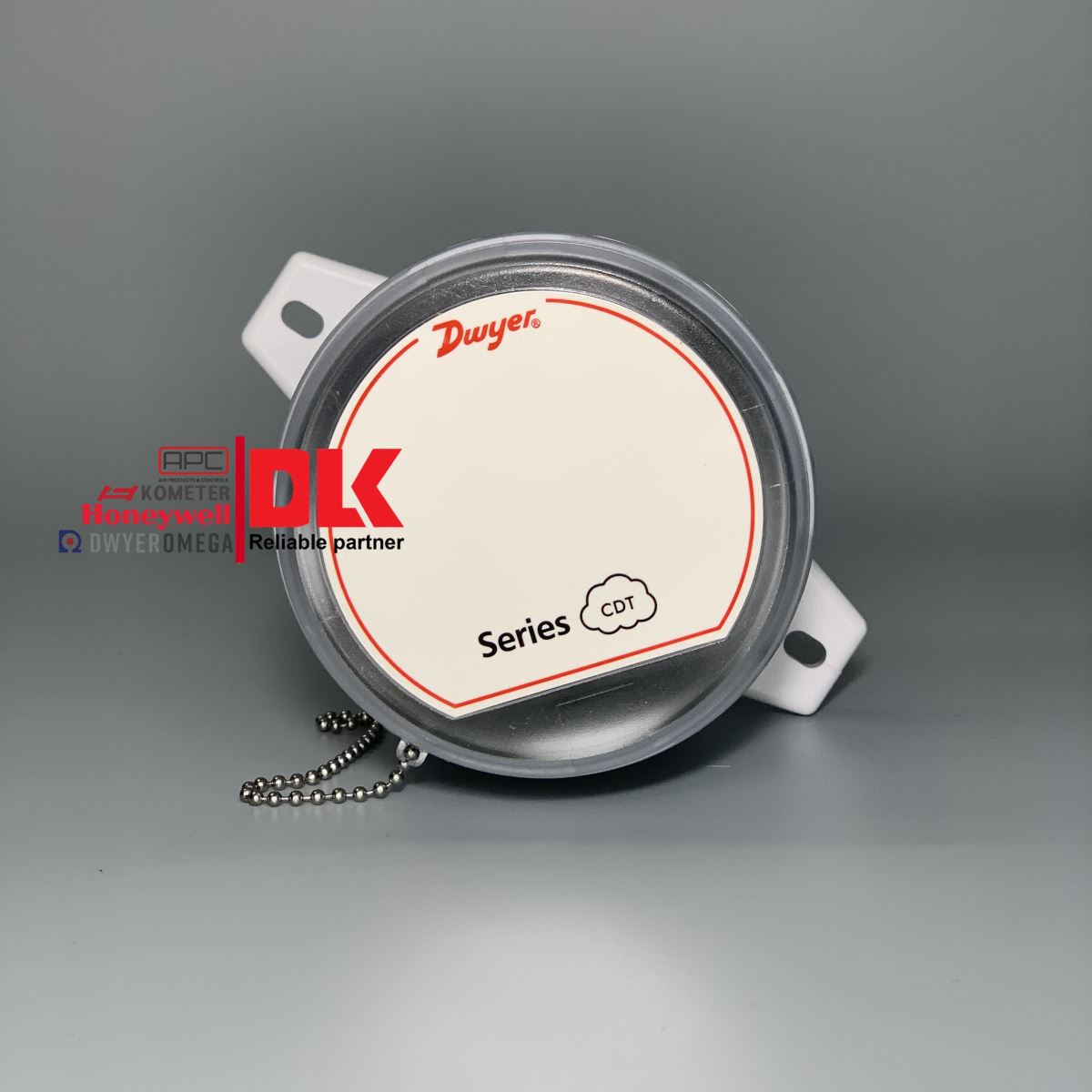
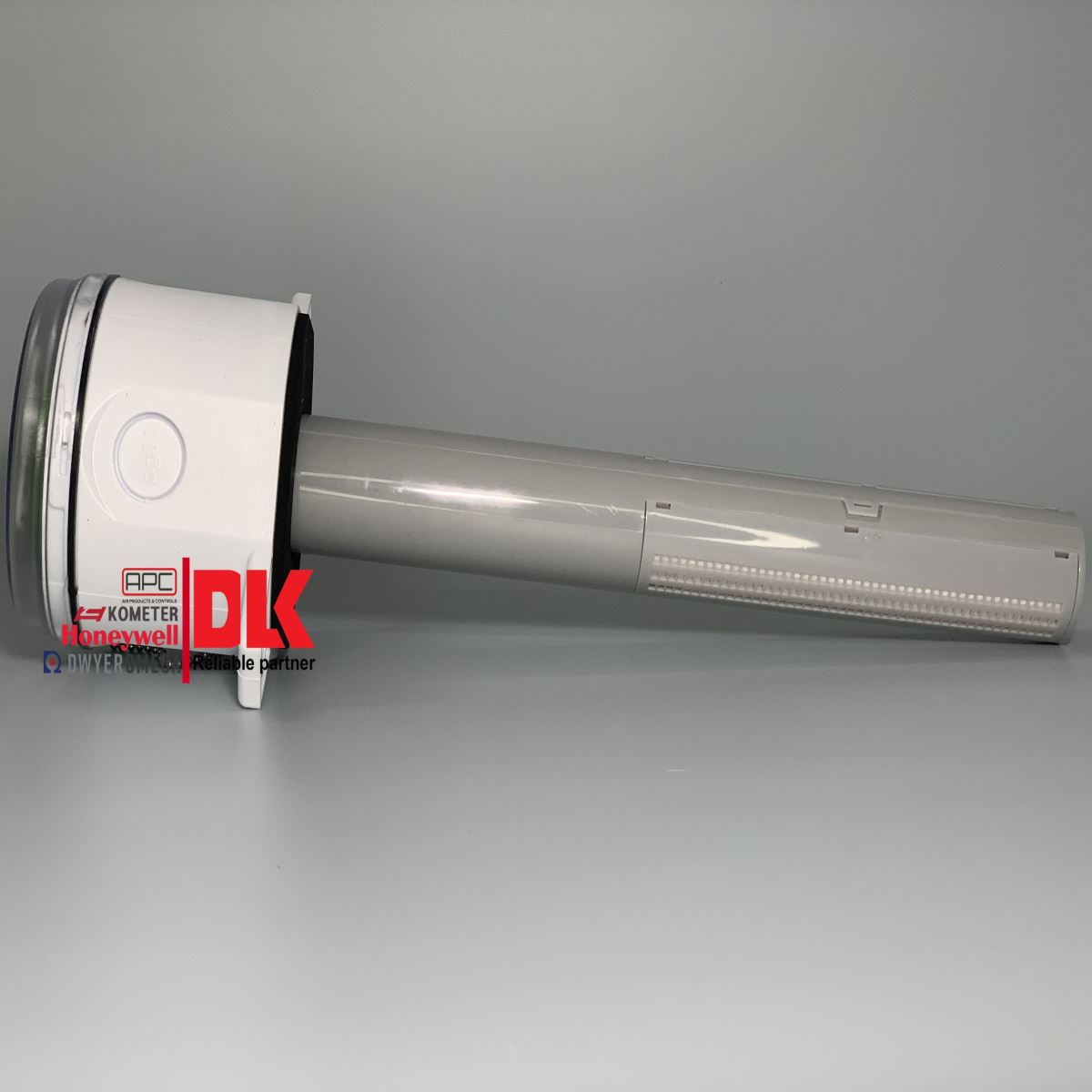
The Dwyer CDT-2D40 duct-mounted CO₂ sensor uses NDIR technology to measure CO₂ concentration and air temperature for HVAC and BMS systems. Officially distributed by DLK.
Overview of the Dwyer CO₂ Duct-Mounted Sensor CDT-2D40
The Dwyer Instruments CO₂ Duct-Mounted Sensor Model CDT-2D40 is a precision gas sensor designed for measuring carbon dioxide (CO₂) concentration and air temperature in ventilation duct systems. Manufactured by Dwyer Instruments – USA using proven NDIR (Non-Dispersive Infrared) technology, this sensor delivers reliable CO₂ measurement performance for building automation, HVAC control and indoor air quality (IAQ) optimization. Technical details in this article are based strictly on the official datasheet to ensure accuracy.
This product is imported and distributed by DLK – DLK TRADING SERVICE COMPANY LIMITED, the official distributor of Dwyer in Vietnam. For full product details, visit CO₂ Duct-Mounted Sensor CDT-2D40 on the DLK website.
Operating Principle: Simple but Technically Sound
The Dwyer CDT-2D40 CO₂ sensor operates based on NDIR optical absorption. In this method, infrared (IR) light emitted from a source passes through an air sample chamber. CO₂ molecules absorb specific wavelengths of IR radiation proportionally to their concentration. A photodetector measures the remaining IR light intensity and converts it into an electrical signal calibrated to CO₂ concentration. The NDIR principle ensures high specificity to CO₂ without interference from other common gases, making it suitable for accurate indoor air quality monitoring.
Temperature measurement is integrated into the same unit, enabling temperature compensation of CO₂ readings. This improves measurement stability and supports advanced HVAC/BMS control algorithms.
Real-World Application Scenarios Across Industries
Below are practical scenarios where the Dwyer CO₂ Duct-Mounted Sensor CDT-2D40 delivers measurable value in controlling CO₂ levels and maintaining indoor air quality:
1. Building Automation & Commercial HVAC
In office buildings and commercial facilities, CO₂ levels directly impact occupant comfort and productivity. Integrating the CDT-2D40 into HVAC terminals or ventilation ducts allows real-time CO₂ feedback to the building management system. Control logic can modulate outdoor air intake or demand-controlled ventilation (DCV), optimizing energy use while maintaining acceptable indoor air quality.
2. Educational Institutions
Classrooms, lecture halls, and school facilities often experience fluctuating occupancy. High CO₂ levels can reduce concentration and cognitive performance. Implementing the Dwyer CDT-2D40 in ductwork enables automated ventilation control to bring CO₂ back to target levels, supporting healthier learning environments.
3. Healthcare & Medical Facilities
Hospitals, clinics, and care facilities require stringent indoor air quality management. In waiting areas, procedure rooms, and patient wards, maintaining proper CO₂ concentration is essential for patient comfort and infection control strategies. The duct-mounted sensor provides reliable CO₂ data for centralized HVAC control, contributing to safer clinical environments.
4. Industrial Plant & Manufacturing Environments
Industrial facilities with high occupancy zones or combustion processes can have elevated CO₂ levels. The Dwyer CDT-2D40 fits into duct systems to monitor CO₂, enabling ventilation systems to react automatically to maintain worker safety and ensure regulatory compliance.
These application examples illustrate how accurate CO₂ concentration monitoring improves environmental control, supports energy efficiency, and ensures occupant well-being. For specifications and ordering, see CO₂ Duct-Mounted Sensor CDT-2D40.
Key Benefits of Using the Dwyer CDT-2D40 CO₂ Sensor
When specifying a duct-mounted CO₂ sensor for HVAC or BMS applications, the Dwyer Instruments Model CDT-2D40 offers notable benefits:
Simultaneous CO₂ and Temperature Measurement
One sensor package measures both CO₂ concentration and air temperature. This reduces component count and simplifies installation without sacrificing performance.
High Accuracy and Stability
The NDIR measurement technique ensures accurate CO₂ readings with minimal drift. Typical accuracy is ±40 ppm plus 3% of reading in typical ranges, delivering reliable data for control logic and IAQ reporting.
Flexible Output Options
Multiple analog outputs such as 4–20 mA, 0–5 VDC or 0–10 VDC support seamless integration into building automation systems, energy management systems, PLC controllers, or direct HVAC controller inputs.
Long Sensor Life and Low Maintenance
The NDIR sensor element has an expected operational life of many years, reducing long-term maintenance costs and calibration frequency.
Standards Compliance
The Dwyer CDT-2D40 meets applicable CE requirements for electrical safety and performance, making it suitable for international projects and standardized installations.
Technical Specifications Summary
The table below summarizes critical technical specifications of the Dwyer CO₂ Duct-Mounted Sensor CDT-2D40 (referenced from the official datasheet):
|
Parameter |
Specification |
|
Measurement Method |
NDIR (Non-Dispersive Infrared) |
|
CO₂ Measurement Range |
Typically 0–2000 ppm |
|
CO₂ Accuracy |
±40 ppm + 3% of reading |
|
Outputs |
4–20 mA / 0–5 VDC / 0–10 VDC |
|
Operating Temperature |
0–50 °C |
|
Temperature Accuracy |
±1 °C at 25 °C |
|
Response Time (τ90) |
~2 minutes |
|
Power Supply |
16–35 VDC or 19–28 VAC |
|
Sensor Life Expectancy |
Long life typical with NDIR sensors |
|
Certifications |
CE compliant |
These parameters support confident integration into control systems requiring dependable CO₂ monitoring and ventilator feedback.
Choosing the Right Model for Your Requirements
To select the appropriate CO₂ sensor model, consider the following points:
Measurement Range
If your application regularly exceeds 2000 ppm or requires extended range detection, review available variants or optional ranges within the same sensor series.
Output Signal Needs
Match the sensor’s analog output format (mA or voltage) to the controller or automation system in your project. For example, 4–20 mA outputs are widely used in BMS environments, while 0–10 VDC is common in HVAC controller ecosystems.
Environmental Conditions
Verify installation conditions such as ambient temperature range and duct dimensions to ensure optimal sensor performance and installation compliance.
Selecting the correct configuration up front reduces potential integration issues and improves system longevity.
Why Buy from DLK – Official Dwyer Distributor
DLK – DLK TRADING SERVICE COMPANY LIMITED is the official distributor of Dwyer Instruments in Vietnam, providing genuine products backed by manufacturer warranty, full documentation (CO/CQ), and professional technical support. Engineers and system integrators can rely on DLK for accurate technical consultation, reliable sourcing, and after-sales service tailored for HVAC/BMS applications. For more information and to request quotations, refer to CO₂ Duct-Mounted Sensor CDT-2D40.