Kometer flow sensors are a precise and durable solution for measuring water flow, helping to optimize water treatment systems. With advanced technology, these devices support efficient monitoring of clean water and wastewater, ensuring stable operation and cost savings.
1. Introduction to Flow Sensors in Water Treatment Systems
Role of Flow Sensors in Water Treatment Plants In water treatment systems, flow control is a crucial factor in ensuring operational efficiency and maintaining output water quality. Flow sensors play a role in accurately measuring the amount of water passing through pipes, helping operators monitor and optimize the treatment process.
Key applications of flow sensors in water treatment include:
-
Monitoring influential and effluent flow rates to control system performance.
-
Regulating water flow to ensure accurate filtration, chemical treatment, and sedimentation processes.
-
Detecting leaks or anomalies in the piping system to minimize water loss.
-
Integration into SCADA or IoT systems for automated remote monitoring and control.
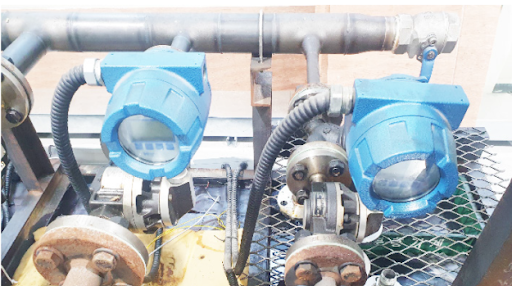
Challenges in Measuring Water Flow Flow measurement in water treatment systems faces many challenges due to the characteristics of the measurement environment:
-
Inconsistent Water Quality: Wastewater may contain debris, air bubbles, or chemicals that affect the accuracy of the sensor.
-
Harsh Operating Conditions: Sensors must operate reliably in environments with high humidity, fluctuating temperatures, and unstable pressure.
-
Large Flow Variations: Water treatment systems often have flow rates that change over time, requiring sensors with a wide measuring range and high sensitivity.
-
Integration with Management Systems: Flow sensors need to be compatible with data transmission protocols for easy connection to the central control system.
Given these requirements, choosing a high-quality flow sensor line, such as the Kometer flow sensor, is the optimal solution to ensure accuracy, durability, and operational efficiency of the water treatment system.
2. Overview of Kometer Flow Sensors
Technology and Operating Principle Kometer flow sensors use advanced measurement technology to ensure high accuracy in water treatment systems. The main technologies include:
Electromagnetic Flow Sensors: Based on Faraday's law of electromagnetic induction, the water flow passing through the sensor generates a voltage proportional to the flow velocity. This type is suitable for clean water, wastewater, and conductive liquids. (HVAC term: Electromagnetic Flowmeter)
Ultrasonic Flow Sensors: Operate by emitting and receiving ultrasonic waves to measure flow velocity. The advantage is that they do not come into direct contact with the fluid, making them suitable for water with sediment or corrosive chemicals. (HVAC Term: Ultrasonic Flowmeter)
Turbine Flow Sensors: Use a turbine wheel that rotates with the water flow to measure flow. This type is suitable for water systems with stable flow rates. (HVAC Term: Turbine Flowmeter)
Popular Kometer Product Lines Kometer offers various flow sensor lines suitable for each application in water treatment systems:
Kometer KTM Series – Electromagnetic flow sensors widely used by customers in Vietnam with high accuracy, widely used in clean water and wastewater.
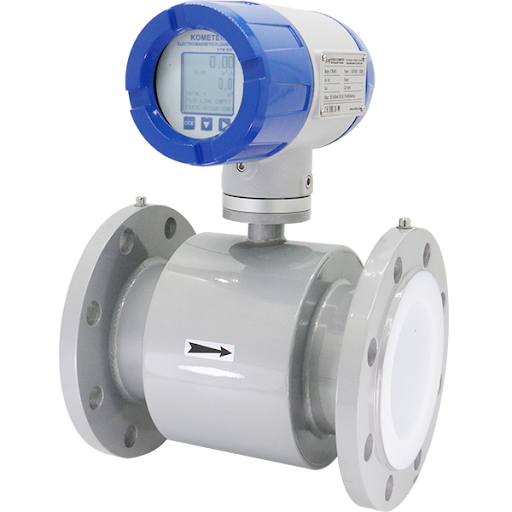
Series KTM-800: Electromagnetic Flow Sensor (Electromagnetic Flowmeter)
Kometer KUF Series – Ultrasonic flow sensors, non-contact, easy to install and maintain.
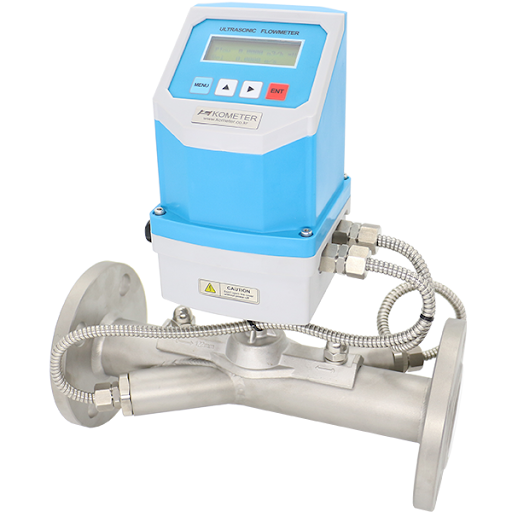
Series GSA-250-W: Ultrasonic flow sensor (Ultrasonic Flowmeter)
Kometer KTR Series – Turbine flow sensors, fast measurement, suitable for high-pressure systems.
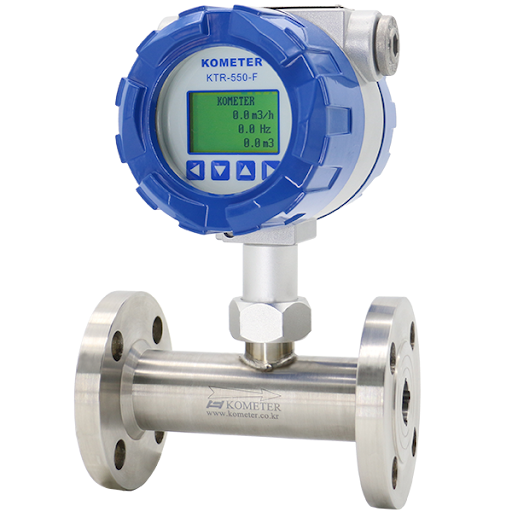
Series KTR-550-F: Turbine flow sensor (Turbine Flowmeter)
With a diverse range of products, Kometer flow sensors meet the measurement needs in water treatment systems, helping businesses optimize operations and reduce maintenance costs.
3. Applications of Kometer Flow Sensors in Water Treatment Systems
Kometer flow sensors are widely used in water treatment systems due to their high accuracy, superior durability, and ability to operate stably in various environmental conditions. Below are some important applications of these sensors in the water treatment industry.
3.1. Measuring Clean Water and Wastewater Flow In clean water and wastewater treatment plants, Kometer flow sensors help monitor the amount of influent and effluent, thereby ensuring efficient operational processes.
Clean Water: Measure the flow of water supplied from the source to the treatment system, control the amount of water distributed to users.
Wastewater: Monitor the flow of wastewater after the treatment process to ensure compliance with environmental standards.
Chemical Control: Combined with an automatic control system (e.g., a Programmable Logic Controller (PLC) in an automation context) to adjust the amount of treatment chemicals according to the water flow.
3.2. Flow Control in Industrial Water Supply Systems Kometer flow sensors are used in factories and industrial parks to measure the water flow used in the production process.
Monitoring water consumption helps businesses optimize water resources and reduce waste.
Measuring the flow of cooling water in industrial cooling systems to ensure the operating efficiency of equipment. (HVAC Term: Cooling Water Flow Monitoring)
Monitoring water filtration systems to control the flow of water through the filters, ensuring the quality of the output water.
3.3. Applications in Irrigation Systems and Water Plants Kometer flow sensors are also used in irrigation systems, agricultural water supply, and water plants to monitor flow and distribute water appropriately.
Automated Irrigation Systems: Measure the flow of water supplied to crops, helping to optimize water usage.
Pipeline Network Management: Monitor flow in water pipelines to detect leaks or water loss.
Dam and Reservoir Systems: Measure the inflow and outflow of water to control water levels and regulate flow appropriately.
With diverse applications, Kometer flow sensors are the optimal solution to help water treatment systems operate efficiently, save costs, and ensure compliance with environmental regulations.
4. Advantages of Using Kometer Flow Sensors in Water Treatment
Kometer flow sensors are trusted in water treatment systems due to many outstanding advantages. Here are the reasons why Kometer is the optimal choice for water plants, water supply and drainage systems, and industrial applications.
4.1. High Accuracy and Stability Kometer sensors use advanced technologies such as electromagnetic, ultrasonic, and turbine, ensuring high accuracy when measuring the flow of clean water, wastewater, or liquids with low conductivity.
-
Reduces measurement errors, helping to optimize water treatment and distribution processes.
-
Wide measuring range, suitable for various flow rates, from low to high.
4.2. Ability to Withstand Harsh Environments
-
Robust design, corrosion-resistant, waterproof with IP65 – IP68 rating, ensuring stable operation even in humid, chemically-exposed environments.
-
Withstands high pressure and temperature changes, suitable for industrial water treatment systems, clean water and wastewater plants.
-
Some ultrasonic sensor lines do not come into direct contact with the flow, helping to reduce wear and tear and extend the life of the device. (HVAC Term: Non-Invasive Flow Measurement)
4.3. Easy Installation, Maintenance, and System Integration
-
Supports multiple installation types: clamp-on, direct mounting on the pipe, or insertion type, providing flexibility during deployment.
-
Communicates with automatic control systems (SCADA, PLC) through connection standards such as Modbus, RS485, 4-20mA, enabling remote flow monitoring and management. (Automation terms: SCADA Integration, PLC Communication, Modbus Protocol, RS485 Communication, 4-20mA Analog Output)
-
Simple design, few mechanical parts, making maintenance easy and saving long-term operating costs.
4.4. Cost Savings and Improved System Performance
-
Minimizes water loss thanks to accurate measurement, helping to optimize operating costs.
-
Improves flow control efficiency, helping the water treatment system operate stably and save energy.
-
Integrates with IoT and AI solutions to automate monitoring and provide early warnings of leaks or abnormal flow changes. (Automation term: IoT Integration)
With these advantages, Kometer flow sensors are the optimal solution to help water treatment systems operate efficiently, durably, and cost-effectively in the long term.
5. DLK – Distributor of Genuine Kometer Flow Sensors in Vietnam
DLK is a company specializing in providing industrial measuring equipment, especially flow sensors, and flowmeters from the genuine Kometer brand. With many years of experience in the industry, DLK is committed to providing optimal measurement solutions suitable for water treatment systems in Vietnam.
Commitment to Distribute Genuine Kometer Products
-
Products Meet International Standards: Kometer flow sensors distributed by DLK are imported directly, ensuring a clear origin.
-
Long-Term Warranty Policy: Commitment to genuine warranty from 12 – 24 months, dedicated technical support throughout the usage process.
-
Calibration and Verification Support: Provides periodic calibration and verification services to ensure the equipment always achieves the highest accuracy.
DLK not only provides products but also offers comprehensive solutions for water treatment systems:
-
Consulting on choosing sensors suitable for each need, helping to optimize investment costs.
-
Installation instructions, integration with control systems such as SCADA, PLC. (Automation Term: System Integration)
-
Professional maintenance and repair, ensuring stable and long-term system operation.
If you are looking for an accurate and reliable flow measurement solution for your water treatment system, please contact DLK for detailed advice:
Contact DLK Trading Service Company Limited
Address: G6/14 Tran Van Giau, Le Minh Xuan Commune, Binh Chanh District, Ho Chi Minh City
Head Office: 111/7 Vuon Lai, Phu Tho Hoa Ward, Tan Phu District, Ho Chi Minh City
Website: https://dlk.com.vn/l
Email: info@dlk.com.vn
Hotline: 070 357 0101 – 093 279 2697
Let DLK accompany you on your journey to building and developing modern, sustainable industrial systems!