Discover how precise temperature, airflow, humidity, and pressure monitoring enhances data center uptime, energy efficiency, and equipment reliability in mission-critical environments.
Maintaining Optimal Performance Through Advanced Sensing and Control Solutions
Data centers are the digital engine rooms of our world—supporting everything from cloud computing and video streaming to financial systems and AI-driven automation. As workloads become more intensive and power densities rise (with some server racks exceeding 240 kW), maintaining a reliable, efficient, and safe environment has never been more important.
Modern data centers are complex ecosystems that require more than just powerful servers. Success depends on real-time environmental monitoring and precise control over temperature, humidity, airflow, and pressure. With intelligent sensing and control solutions, facilities teams can proactively prevent downtime, optimize cooling, and extend equipment life.
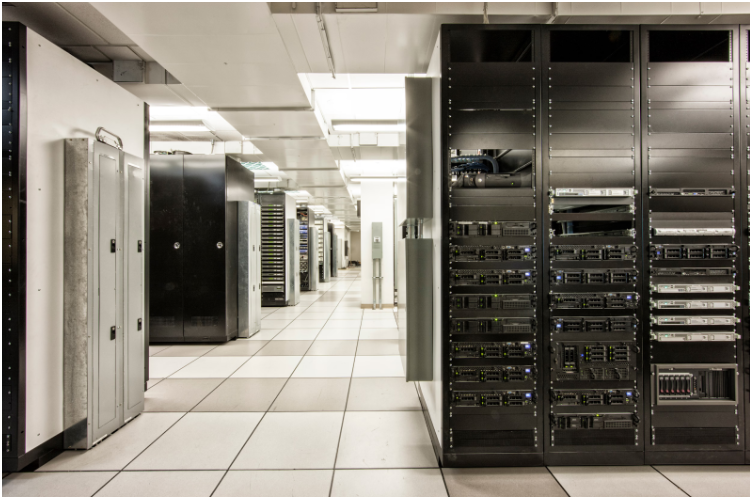
Temperature and Humidity Monitoring: Protecting IT Infrastructure
Excess heat and elevated humidity are among the top threats to server performance and longevity. Research from leading data center operators (e.g. IBM) confirms that poor thermal and humidity control increases the risk of hardware failures, system inefficiencies, and costly downtime.
✅ Series RHP – Humidity and Temperature Transmitters
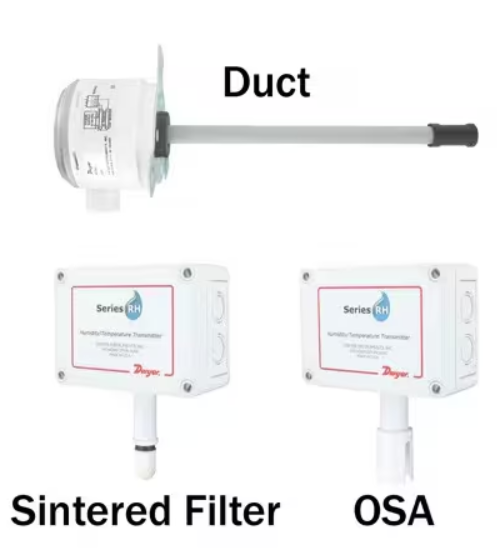
Combining high-accuracy capacitive humidity sensing with precise temperature monitoring, the Series RHP transmitter offers ±2.5% RH accuracy and reliable performance in a compact design. It’s ideal for critical zones like hot/cold aisles, server rooms, and network closets.
✅ Series TE-E/N – Wall-Mount Temperature Sensors
Designed for ambient monitoring in server rooms and control spaces, these low-profile sensors provide cost-effective, accurate temperature data that supports HVAC automation and thermal management strategies.
Airflow Monitoring: Enhancing Cooling System Efficiency
Uneven or insufficient airflow leads to hot spots, overworked HVAC systems, and energy waste—issues that directly threaten data center uptime.
✅ Series AVUL & AVLV – Air Velocity Transmitters

These transmitters measure air velocity or volumetric flow within ductwork. Their linear outputs integrate seamlessly with building management systems (BMS), providing real-time feedback for active airflow management.
The AVLV model is particularly well-suited to low-range, high-precision airflow applications where stable cooling is critical.
Ideal for optimizing airflow in return and supply ducts, enhancing energy efficiency, and reducing cooling load on servers.
Differential Pressure Monitoring: Maintaining Clean, Balanced Environments
In high-density facilities, even slight pressure fluctuations can lead to cooling inefficiencies and contamination risks. Monitoring differential pressure across filters and air handling units ensures clean, balanced airflow and helps extend HVAC lifespan.
✅ Series MSX & MSX Pro – Magnesense® Differential Pressure Transmitters
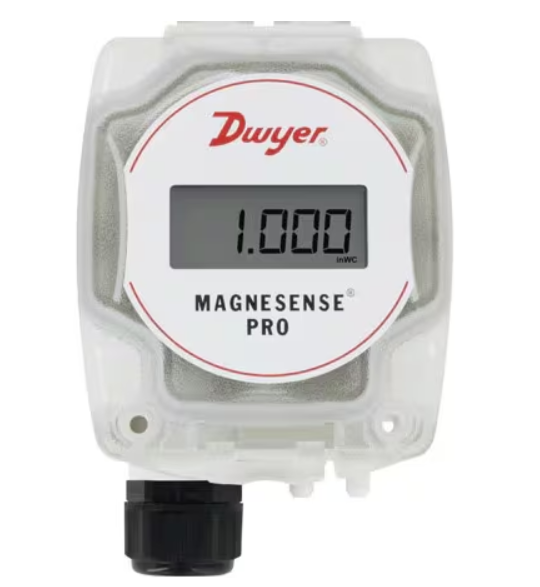
These advanced sensors deliver highly accurate pressure readings with features such as:
– Square root capability for converting pressure into volumetric airflow
– Dual output (voltage & current) for seamless BMS integration
– Alarm triggers and VFD control for dynamic airflow management
Use cases include controlling fan speeds, monitoring filter conditions, and maintaining airflow consistency in critical server zones.
Flow Monitoring: Ensuring Cooling System Uptime
Liquid-based cooling systems are essential for managing the thermal load in modern data centers. Consistent flow is vital—not just for efficiency, but for system uptime.
✅ Series IEF – Insertion Electromagnetic Flowmeters
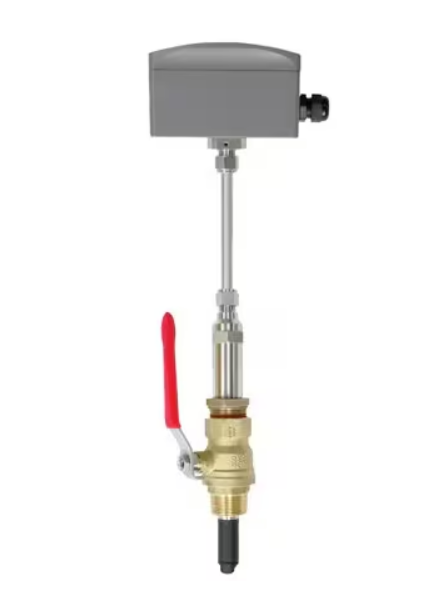
Designed for chilled water and liquid cooling systems, the Series IEF enables:
– Hot-tap installation/removal, so sensors can be replaced without shutting down systems
– Triple-sensor failover capability, ensuring uninterrupted monitoring even during maintenance
– Accurate flow measurement, supporting system diagnostics and redundancy planning
This makes it an ideal choice for mission-critical cooling loops where downtime is not an option.
Why Environmental Monitoring Is Essential in Data Centers
Implementing advanced sensing solutions delivers key benefits:
🔹 Maximized Uptime – Prevent overheating and hardware failures
🔹 Energy Optimization – Fine-tune cooling based on real-time demand
🔹 System Longevity – Reduce mechanical stress on HVAC and cooling systems
🔹 Data-Driven Maintenance – Predict and prevent failures before they occur
🔹 Scalable Control – Integrate seamlessly into existing BMS platforms
Conclusion: Smart Sensors, Smarter Data Centers
As data centers become more power-dense and workload-critical, investing in high-performance sensing and control systems is no longer optional—it’s essential. From airflow to humidity, and pressure to liquid cooling flow, real-time data ensures your facility runs reliably, efficiently, and safely.
Whether you’re designing a new data hall or retrofitting legacy infrastructure, DwyerOmega’s environmental monitoring solutions give you the insight and control needed to stay ahead in a demanding digital world.
✅ Need Help Specifying Sensors for Your Data Center Project?
Get expert guidance on selecting the right sensing technologies for your facility. Contact our team for personalized support or request a product demo today.
What Is a Data Center?
A data center is a facility that houses computer systems and associated components, such as telecommunications and storage systems. Traditionally, businesses operated their own server rooms on-site. However, the trend has shifted towards cloud-based data centers, where essential IT equipment is hosted off-site and often managed by third-party providers.
The Importance of Data Centers
Data centers are integral to the functioning of various online services, including:
-
Streaming Platforms: Delivering content to users worldwide.
-
E-commerce Websites: Facilitating online shopping experiences.
-
Cloud Storage Services: Allowing users to store and access data remotely.
-
Social Media Platforms: Enabling communication and content sharing.
-
Ride-Hailing Services: Managing real-time data for transportation logistics.
-
Online Booking Systems: Handling reservations for accommodations and services.
Given their critical role, data centers are classified as "mission-critical" environments. They are designed to have minimal downtime, with uptime guarantees often exceeding 99%. This reliability is essential for businesses that depend on continuous online operations.
Energy Consumption and Efficiency
Data centers are among the most energy-intensive building types, consuming 10 to 50 times more energy per floor space than a typical commercial office building. This high energy consumption underscores the importance of implementing efficient systems to manage and reduce energy usage.
Environmental Monitoring in Data Centers
To ensure optimal performance and longevity, data centers must monitor various environmental parameters, including:
-
Temperature: Maintaining an optimal operating temperature to prevent overheating.
-
Humidity: Controlling humidity levels to protect sensitive equipment.
-
Airflow: Ensuring adequate airflow to dissipate heat effectively.
-
Differential Pressure: Monitoring pressure differences to detect airflow issues.
-
Flow Control: Managing the flow of cooling fluids to maintain system efficiency.
Adhering to guidelines set by organizations like the American Society of Heating, Refrigeration, and Air Conditioning Engineers (ASHRAE) can help data centers operate efficiently and sustainably.
Conclusion
Data centers are pivotal to the digital infrastructure that supports our daily online activities. Understanding their function, importance, and the need for efficient environmental monitoring is essential for anyone involved in IT infrastructure and facility management.