Monitoring Indoor Air Quality (IAQ) in Schools: Lessons from the Pandemic
The COVID-19 pandemic completely transformed how we perceive the management of public spaces, especially educational facilities. The partial or complete closure of schools highlighted our lack of preparedness, forcing educational organizations to re-evaluate HVAC systems, indoor air quality (IAQ), and even how parents and teachers view which schools are the safest, best institutions for themselves and their families.
To address this issue, ASHRAE and The Center for Green Schools partnered to launch the first known national effort to collect district-level data on IAQ measures in response to the COVID-19 pandemic, detailed in their report "Preparation in the Pandemic: How Schools Implemented Air Quality Measures to Protect Occupants from COVID-19." This report surveyed K-12 schools in 47 districts and independent schools, representing over 4,000 schools and 2.5 million students in cities, suburbs, and rural areas across 24 states.
In the study, they asked respondents how they prioritized and responded to 6 different IAQ strategies to improve ventilation to reduce airborne transmission. Unsurprisingly, mechanical ventilation that increased fresh air was both most highly prioritized and most commonly adopted among respondents, closely followed by flushing rooms with fresh air before and after they are occupied for a pre-specified duration. One of the main challenges cited by participants in the study was that current HVAC systems were not designed to support mechanical ventilation and fresh air flushing in their current state.
A year later, ASHRAE and The Center for Green Schools partnered with Trane to launch a follow-up study "Managing Air Quality During the Pandemic: How K-12 Schools Addressed Air Quality in the Second Year of COVID-19" to reflect on how the pandemic, and schools’ responses to it, evolved in the intervening months.
The new study highlighted the "seeing is believing" phenomenon. Teachers felt more comfortable when seeing physical signs of increased indoor air quality and filtration, such as portable room filtration options, versus simply being aware that adjustments to the HVAC systems were made that increased outside air and room air changes.
Typically, there's limited data and instrumentation in a school setting that physically ensures and reports on the effectiveness of increased clean outdoor air. According to the study, "Building managers know that opening outdoor air dampers on HVAC units will lead to increased outdoor air delivery indoors, assuming the system is working properly; however, it is less clear to what extent changes to damper openings are associated with air exchange rates unless this is being measured." Without the physical "proof" of increased indoor air quality, building occupants are not more comfortable, despite its known effectiveness in reducing the spread of disease. By measuring the supply and return air velocities or flows, building owners and managers can show the increases in air changes and increases in clean outside air. Additionally, monitoring supply and return air velocities can help ensure proper maintenance on dampers that might go unnoticed without regular maintenance.
DwyerOmega offers a number of robust, flexible, and easily installable solutions that can help schools accurately measure and validate the air supplied to classrooms, increasing ventilation that can reduce airborne transmission.
DwyerOmega Solutions: Ensuring Fresh Air for Educational Environments
DwyerOmega proudly provides leading instruments and solutions to help schools and educational facilities effectively monitor and enhance indoor air quality. With our diverse product portfolio, we can meet the most demanding requirements, from monitoring differential pressure in isolation rooms to measuring fresh airflow in HVAC systems.
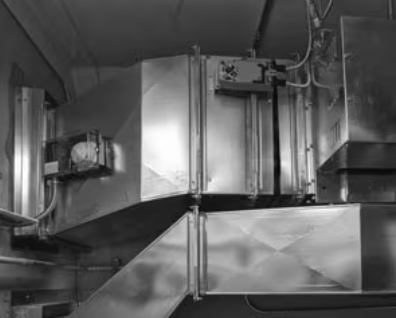
Monitoring Airflow and Velocity: Key Factors for Effective Ventilation
To ensure increased fresh air and effective room air changes, precise measurement of air velocity and flow is indispensable.
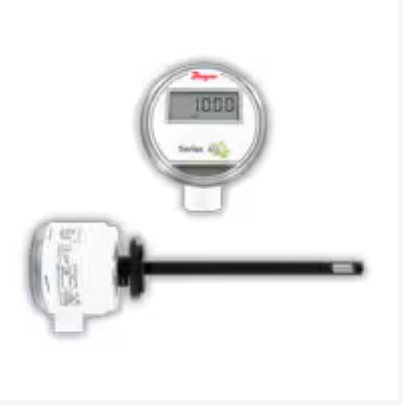
Series AVUL Air Velocity Transmitters: The award-winning Series AVUL can quickly and accurately measure air velocity or volumetric flow with multiple output options and communication protocols.
Magnesense® Series MSX and MSX Pro Differential Pressure Transmitters: Models like MSX-W10-PA, MSX-W10-PA-LCD, MSX-W12-PA, and MSX-W13-PA provide differential pressure monitoring in air handlers, ducts, VAV systems, and buildings with a total of 32 ranges. They help verify the performance of ventilation systems.
Series MAFS and Series PAFS Averaging Flow Sensors: These sensors work with air velocity gauges, transmitters, and switches to deliver an accurate measurement of velocity pressure in a duct, ensuring the correct amount of air is supplied according to standards.
Comprehensive Environmental Control and Monitoring
Beyond airflow, maintaining other environmental parameters like temperature, humidity, and room pressure is also critical:
StabiliSENSE™ Series RSMC Critical Room Status Monitor: Particularly important for school health rooms or isolation areas, the RSMC monitors differential pressure, relative humidity, airflow, and door status. Models like RHPX-3SDA0-00 can be integrated for precise humidity/temperature sensing.
Series 629C Differential Pressure Transmitters: Models like 629C-05-CH-P2-E5-S1 and 629HLP-06-P2-S1 provide accurate and continuous 4-20 mA signals for air pressure monitoring, ideal for monitoring pressure between zones.
ADPS Series Differential Pressure Switches: Models like ADPS-03-2-N-C, ADPS-05-2-N-C, and ADPS-08-2-N-C offer reliable pressure control, helping to detect early issues or over-pressure conditions.
Magnehelic® Series 2000 Gauges: Models such as 2000-300MM and 2000-60PA provide intuitive, easy-to-read solutions for monitoring differential pressure between rooms, allowing teachers and staff to see "physical proof" of room pressure.
RHP Series Humidity/Temperature Transmitters: With models like RHP-3N44-LCD, RHP-3D11, RHP-3S22, RHPLC-3N11, RHPLC-3N22, and RHPX-2SDA0-00, these help control room temperature and humidity, ensuring a comfortable and safe learning environment.
BTT Series Building Temperature Transmitters: Models like BTT-D06-1 and BTT-I06-1 can be used to monitor temperature in related applications.
CDT-2N40 CO2 Transmitter: Monitoring CO2 levels is a crucial indicator of ventilation quality and fresh air supply. The CDT-2N40 helps maintain optimal CO2 levels, ensuring fresher air.
Other Versatile Products: DwyerOmega also offers solutions like CMT200, DEI-2288NE, GSTA-C, KTM-800-50, PFT-HAN-B611-S, RT-3000-P, SL-2000-P, T6865H2WB, TFM428KNM/U, VC6013AJC1000T, VC6013APC1000T, and WFS-1001-H. These products can be integrated to create a comprehensive environmental management system, meeting various specific school needs.
With the variety of options, outputs, and ranges of these series and more, DwyerOmega products can easily fit into existing HVAC systems to start supporting these highly prioritized initiatives.
DLK – Your Trusted Partner for Enhancing School IAQ
At DLK, the official distributor of DwyerOmega in Vietnam, we understand the importance of creating a safe and healthy learning environment. We are committed to supporting schools in implementing and maintaining leading air quality solutions.
We offer:
Ready stock of popular DwyerOmega models, ensuring prompt delivery for your projects.
Expert on-site technical consultation to help you select the precise DwyerOmega product, best suited for your school's HVAC system and specific needs.
Comprehensive support for installation, calibration, and periodic maintenance, ensuring the long-term accuracy and reliability of your IAQ monitoring systems, providing the "physical proof" of air quality that teachers and students need to see.
Don't let air quality be a barrier to health and academic performance. Contact DLK today to discover how DwyerOmega solutions can help your school build a safer, healthier, and more effective future.