Dwyer 2300-60PA, 2300-120PA Cleanroom Differential Pressure Gauge | Pharmaceutical GMP
Posted on: 19/05/2026
Premium Dwyer differential pressure gauges for pharmaceutical cleanrooms (2300-60Pa, 2300-120PA) compliant with WHO-GMP. High accuracy & full CO/CQ at DLK.
Dwyer Differential Pressure Gauge for Pharmaceutical Cleanrooms — Standards for Filter Monitoring and Room Pressure Compliance with GMP
In pharmaceutical manufacturing facilities, strict compliance with international regulatory bodies such as WHO-GMP and EU-GMP is non-negotiable to secure product efficacy and eliminate contamination risks. Within mechanical, electrical, and plumbing (MEP) infrastructure, controlling micro-scale air pressure differentials between cleanrooms and corridors is a foundational defense line against cross-contamination. Utilizing a dedicated Dwyer differential pressure gauge for pharmaceutical cleanrooms, specifically engineered low-range models like the 2300-60Pa and 2300-120PA, offers a highly precise, reliable, and durable monitoring solution.
What is the Dwyer Series 2300 for Pharmaceutical Cleanrooms?
The Dwyer Series 2300 differential pressure gauges are specialized configurations within the legendary Magnehelic® Series 2000 ecosystem developed by Dwyer Instruments (USA). These devices utilize a high-precision mechanical design centered around a flexible silicone rubber diaphragm linked to a frictionless magnetic helical movement mechanism. This engineering approach completely avoids mechanical gear trains, drastically reducing physical wear and ensuring outstanding sensitivity to low-range micro-differential pressures. Operating completely without electrical power, these gauges function continuously 24/7, providing vital safety assurances during facility power failures.
In a pharmaceutical cleanroom setup, these gauges perform two vital technical duties: tracking static pressure drops across adjacent rooms to verify cascading airflow direction, and monitoring differential pressure across primary air handling unit (AHU) filter banks (such as pre-filters or bag filters) to indicate exact maintenance or replacement cycles.
Detailed Comparison of Popular Models
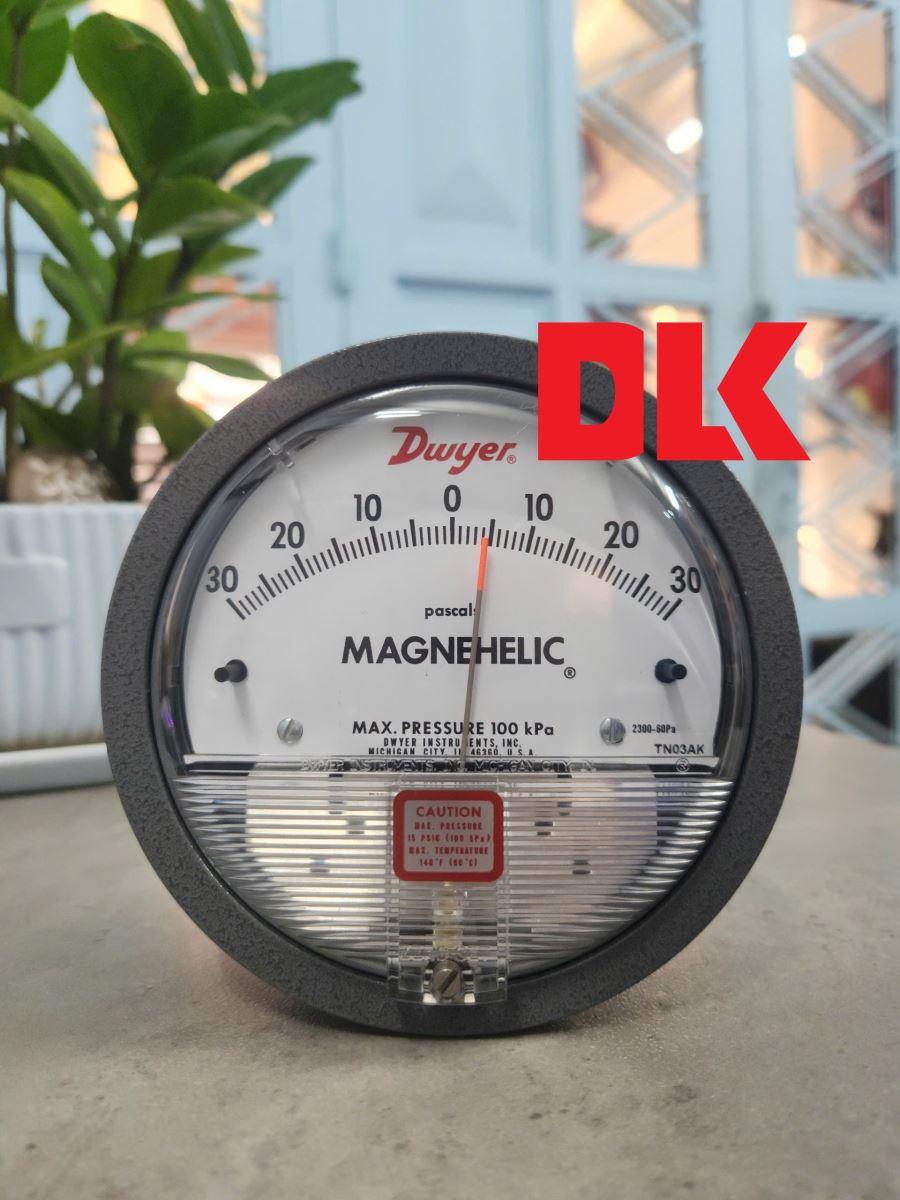
Model 2300-60Pa — -30 đến 30 Pa Range
The 2300-60Pa model covers an ultra-low measurement span of -30 to 30 Pascals (Pa), featuring small 2.0 Pa minor subdivisions. According to the manufacturer's catalog specifications, this specialized low-range layout delivers a full-scale accuracy of ±4%. Its primary role is registering extremely tight pressure differentials between clean spaces and adjacent corridors where larger, coarser industrial gauges fail to provide readable resolution.
Ideal for: Static pressure monitoring in high-grade processing areas, material airlocks (MAL), personnel airlocks (PAL), and clean sampling booths.
Model 2300-120PA — -60 đến 60 Pa Range
The 2300-120PA model expands the operational ceiling to -60 to 60 Pascals. Due to its broader calibrated range, this model boasts a higher accuracy rating of ±2% of full scale at standard ambient temperatures. It provides a versatile middle-ground threshold for mechanical contractors tracking moderate pressure resistances.
Ideal for: Monitoring initial and final pressure drops across primary G4/F5 pre-filters in AHUs, or verifying static pressure barriers in large-volume pharmaceutical packaging halls.
Quick comparison table of Dwyer Series 2300 cleanroom models
|
Model
|
Calibrated Range
|
Full-Scale Accuracy
|
Key Mechanical Traits
|
Primary Application
|
|
2300-60Pa
|
-30 –> 30 Pa
|
±4% FS
|
Rear pressure relief plug (25 psig), frictionless helix core
|
Airlocks, clean corridors, adjacent room containment
|
|
2300-120PA
|
-60 –> 60 Pa
|
±2% FS
|
IP67 weatherproof housing, dual process connection options
|
AHU primary filter loading, large-scale ventilation ducts
|
Advanced HVAC Knowledge — Cleanroom Pressure Regulations under WHO-GMP Standards
In cleanroom ventilation design, preventing airborne contaminants from moving backward into sterile environments relies heavily on controlling airflow paths. Air must flow down a strict gradient, moving from the highest grade of cleanliness down to the lowest grade. Achieving this physical barrier requires an HVAC system to establish a controlled cascade of static pressures between rooms.
Per international WHO-GMP and ISO 14644-4 guidelines, the mandatory static pressure differential between a designated cleanroom and an unclassified space, or between successive clean grades (Grades A, B, C, D), must be maintained at a stable offset of 10 to 15 Pascals when all doors are fully closed. In facilities dealing with toxic agents, hazardous powder blending, or live viruses, a negative pressure barrier is instead engineered relative to the surrounding corridors to prevent toxic leakage out of the room. Flush-mounting a Dwyer mechanical gauge into sandwich panel walls allows facility operators, quality control inspectors, and auditors to instantly verify room differential status on-site with simple visual checks, satisfying validation protocols.
Technical Specifications Extracted from Dwyer Catalog
|
Service Media
|
Air and non-combustible, compatible gases (Optional Buna-N diaphragm for Hydrogen service)
|
|
Housing Materials
|
Die-cast aluminum case and bezel, acrylic front lens plate resistant to typical cleanroom wipe-down chemicals
|
|
Maximum Working Pressure
|
-20 in Hg to 15 psig (-0.677 bar to 1.034 bar) continuous load capacity
|
|
Overpressure Protection
|
Rubber blowout relief plug located at the rear housing wall, popping out at ~25 psig (1.72 bar)
|
|
Ambient Temperature Limits
|
20 to 140°F (-6.67 to 60°C) as certified under official factory manuals
|
|
Process Connections
|
Duplicated 1/8" female NPT threaded ports (One pair side, one pair back for HIGH/LOW plumbing)
|
|
Enclosure Rating
|
IP67 certified weatherproof housing, salt spray tested for 168 hours
|
|
Physical Dimensions
|
4" (101.6 mm) diameter scale dial face; Net weight 1 lb 2 oz (510 g)
|
Practical Field Guidelines for Installation to Avoid Accuracy Drift
Deviation from True Vertical Mounting: Low-range mechanical gauges use a calibrated balance spring and magnet assembly tuned at the factory in a vertical plane. Installing the dial tilted backward or off-center alters how gravity impacts the diaphragm assembly, producing an immediate shift error. Always employ a spirit level on cleanroom panels to achieve an exact plumb 90-degree mount.
Excessive or Kinked Tubing Runs: When routing polyurethane or silicone tubing from stainless steel static room probes to the gauge ports, avoid total lengths exceeding 15 meters or tight bends behind ceiling joists. Kinked lines trap stagnant air pockets, delaying gauge response times and generating false pressure readouts. Keep tubing runs as straight and short as possible.
Omitting Pre-Start Field Zeroing: Variations in local site elevation or transport handling can move the indicator needle slightly off the 0 Pa line. Before applying any process pressure, disconnect all tubing lines, leave both HIGH and LOW ports completely vented to open atmospheric air, and use a small flat blade tool to adjust the zero screw at the bottom of the front cover until the needle mirrors the zero mark exactly.
Why Partner with DLK TRADING SERVICES CO., LTD?
100% Genuine Imports: DLK TRADING SERVICES CO., LTD distributes authentic Dwyer Instruments USA gear, delivering complete material batches with full factory CO/CQ certification records required for medical-grade handover approvals.
Tailored Engineering Advisory: Our trained technical experts support MEP mechanical contractors in selecting correct Pascal scales (Class 100 up to Class 100,000) and proper wall flush-mounting kits.
Strategic Supply Operations: Maintaining significant local stock profiles allows us to respond promptly to project deadlines with rapid shipments across Vietnam.
Product Catalog Reference Links
Magnehelic® Series 2000 Differential Pressure Gauges — Official Product Page
Contact DLK TRADING SERVICES CO., LTD: 070 357 0101 | info@dlk.com.vn | https://dlk.com.vn/